


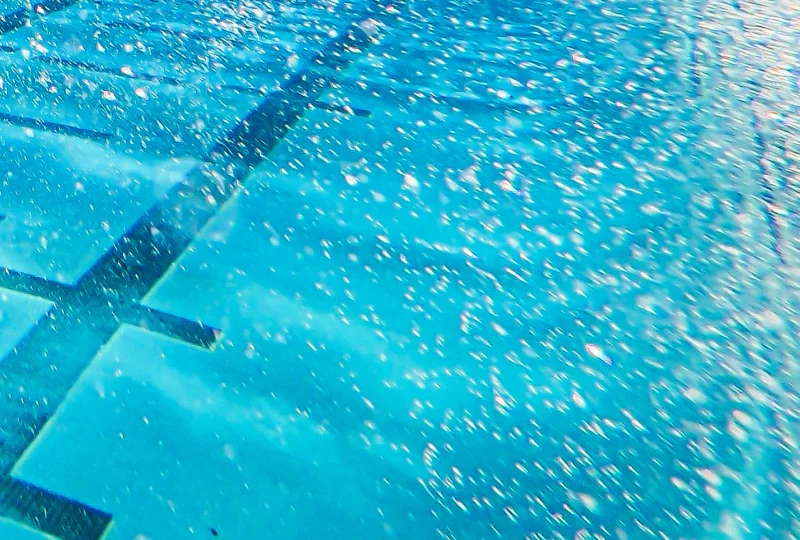
You turn the pump on and notice bubbles fizzing out of the return jets, sometimes with a faint gurgle from the pump housing. It’s one of those symptoms that feels alarming mostly because it’s confusing the problem shows up at the returns, but the actual cause is almost always somewhere else entirely, upstream of the pump.
The short version: air bubbles in your pool returns almost always mean air is getting into the system on the suction side, before the water reaches the pump. That’s usually fixable, and it isn’t automatically an underground leak. But it can be, which is why knowing what to check yourself and what needs a professional matters.
Quick Answer: Why Are Bubbles Coming From My Pool Jets?
Air bubbles at the return jets almost always mean air is entering the circulation system somewhere before the pump the skimmer, pump lid, valves, or suction plumbing. Common causes include a low water level, a poorly sealing pump lid or worn O-ring, a loose drain plug, or a leaking suction-side fitting. A few bubbles right after startup are usually just trapped air working its way out. Bubbles that continue steadily, or that come with the pump losing prime or the water level dropping, point to an ongoing air leak that’s worth checking further.
Are Air Bubbles From Pool Return Jets Normal?
Not automatically a problem, but not something to ignore either it depends on the pattern.
A short burst of bubbles for the first several seconds or minutes after the pump starts is common and usually harmless. Air naturally collects in plumbing that’s been sitting idle, especially overnight, and it works its way out once water is moving again. That’s trapped air, not an ongoing leak.
Bubbles that keep coming steadily, that show up every time the pump runs, or that get worse over time are a different story. That pattern means air is continuously entering the system somewhere, and the source needs to be found rather than watched.
Quick Troubleshooting Table
Use this as a starting point for narrowing things down not as a final diagnosis. More than one of these can produce a similar symptom, and confirming the actual source sometimes takes equipment a homeowner won’t have on hand.
| What You NoticeWhat It May MeanWhat to Check | ||
|---|---|---|
| Bubbles only for a few seconds after startup | Trapped air working its way out | Observe whether bubbles stop within a few minutes |
| Continuous bubbles every time the pump runs | Ongoing air entry on the suction side | Check water level, skimmer, and pump lid |
| Pump basket has visible air or isn’t fully packed with water | Suction-side air leak | Inspect accessible suction components |
| Pump loses prime after shutting off | Larger or more persistent air-entry problem | Professional diagnosis may be needed |
| Water level keeps dropping on its own | Possible plumbing or structural leak | Leak detection recommended |
Understanding Suction Side vs. Pressure Side
This distinction explains almost everything about why air bubbles show up where they do.
The suction side is every section of plumbing before the pump the skimmer, the main drain line, the suction pipes, and the pump lid itself. While the pump runs, this side of the system is under vacuum, meaning it’s pulling water rather than pushing it. That’s the important part: a small gap or loose seal here doesn’t usually leak water out where you’d see it. Instead, it pulls air in, because the vacuum draws in whatever it can reach water or air.
The pressure side is everything after the pump the filter, heater, salt system, and the pipes leading out to the return jets. Water here is being pushed outward under pressure, so a problem on this side typically shows up as a visible water leak (a wet spot, a drip, a puddle), not as bubbles.
That’s why air bubbles at the returns point you back toward the suction side almost every time. The pump pulls the air in with the water, pushes the mixture through the filter, and the bubbles finally become visible once they reach the jets even though the actual entry point could be several feet away, near the skimmer or the equipment pad.
1. Your Pool Water Level Is Too Low
This is the single most common cause, and it costs nothing to check.
The skimmer is designed to pull water from right at the surface. When the water level drops below roughly the midpoint of the skimmer opening, the skimmer starts pulling in air along with water especially as wind, splashing, or evaporation moves the waterline around. In Charleston’s long, hot pool season, evaporation adds up faster than most people expect, and a water level that was fine a few weeks ago can quietly creep below the skimmer line.
Safe check: Look at where the water sits relative to the skimmer opening. If it’s below the middle of the opening, add water with a hose until it’s roughly halfway up, then watch the returns while the pump runs.
2. The Skimmer Is Pulling In Air
Even with adequate water level, a skimmer that isn’t operating correctly can pull in air. The weir the small flap or door inside the skimmer that regulates water flow can stick, jam with debris, or sit crooked, creating a vortex that draws air in alongside water.
Safe check: Open the skimmer lid and make sure the weir moves freely and isn’t jammed with leaves, pine debris, or a stray basket. Confirm the skimmer basket itself is seated properly and not cracked.
3. The Pump Lid or O-Ring Is Leaking Air
The pump lid needs an airtight seal to keep the suction side working correctly. A lid that isn’t fully tightened, a sealing surface with debris or grit on it, or an O-ring that’s dried out, flattened, or cracked can all let air in without ever leaking a visible drop of water. This is one of the more confusing suction-side problems for that exact reason the equipment pad stays completely dry while the clear pump lid shows a steady stream of bubbles.
Safe check: With the pump off, inspect the O-ring for obvious cracking, flat spots, or debris, and confirm the lid seats and tightens evenly. Don’t force a plastic lid with tools excess torque can crack it rather than seal it better.
4. A Drain Plug or Fitting Is Loose
Pump housings typically have one or two drain plugs used for winterizing or servicing. If one wasn’t fully reseated after maintenance, or its own small O-ring has degraded, it can pull in air the same way a bad lid seal does.
Safe check: Visually confirm both drain plugs are present, seated, and hand-tight. This is especially worth checking if the bubbles started right after a filter cleaning or other equipment service see the note on that below.
5. A Valve or Suction-Side Connection Is Leaking
Multiport valves, check valves, and the pipe unions between the skimmer, main drain, and pump can all develop small air leaks at their threaded or glued joints over time. Sun exposure, age, and the expansion and contraction that comes with temperature swings can loosen or crack these connections gradually.
Safe check: If valves and unions are visible and accessible above ground near the equipment pad, a visual look for cracking or an obviously loose fitting is reasonable. Actually testing or tightening pressurized suction fittings is better left to a technician, since forcing a fitting that isn’t the actual problem can create a new leak.
6. The Pump Is Losing Prime
A pump that’s properly primed stays filled with water and moves it continuously. A pump that keeps losing prime meaning it has to work to pull water back into itself each time it starts is a sign that air is getting in somewhere on the suction side consistently enough to affect the pump’s ability to hold suction at all.
This symptom tends to escalate: what starts as occasional bubbles can progress to a pump that struggles to start circulating water each time it’s turned on. A pump running dry or fighting to stay primed also runs hotter and wears components faster than one operating normally.
When to call a professional: Recurring loss of prime, especially alongside bubbles, is a strong signal that the suction-side issue is more than a simple lid or water-level fix, and it’s worth having it tested before it affects the pump itself.
7. You May Have an Underground Suction-Side Leak
This is the possibility most homeowners worry about, and it’s real but it’s also less common than the simpler causes above, and it’s not something you can confirm by looking. Underground suction lines can develop cracks or separated joints from ground settling, aging PVC, or, in the Lowcountry specifically, shifting soil conditions and a naturally high water table that put extra stress on buried plumbing over the years.
The clue that points toward this rather than a simple fitting or lid issue is a water level that keeps dropping beyond what evaporation explains, especially combined with persistent bubbles that don’t resolve after checking the lid, water level, and skimmer.
When to call a professional: An underground suction leak needs pressure testing and, often, electronic listening equipment to locate accurately there’s no reliable homeowner check for this one. If you want to rule out simple evaporation first, our guide on telling a leak apart from normal evaporation walks through the bucket test.
8. Air Is Entering After Equipment Maintenance
If the bubbles started right after you or a service technician cleaned the filter, removed the pump basket, or otherwise opened up the system, the most likely explanation is simply trapped air that hasn’t fully worked its way out yet, or a lid/plug that wasn’t seated quite right when everything went back together.
Safe check: Let the pump run for 15–20 minutes and watch whether the bubbles taper off. If they don’t, recheck the pump lid and drain plugs first before assuming a new leak has appeared out of nowhere.
Does Air in the Pool System Mean You Have a Leak?
Not necessarily and this is the distinction that matters most. Air entering the system is a symptom of something not sealing correctly on the suction side. Sometimes that something is trivial: a water level that dipped an inch too low, or a lid that needs a fresh O-ring. Other times it’s a genuine leak, either at a fitting or underground.
The way to tell them apart isn’t the bubbles themselves it’s what else is happening alongside them. Bubbles with a stable water level and no other symptoms usually point to a simple, correctable suction-side issue. Bubbles paired with a water level that keeps dropping, a pump that won’t hold prime, or gurgling that keeps returning after you’ve checked the obvious spots point toward something that needs proper diagnosis, not another round of guessing.
When Air Bubbles Need Professional Leak Detection
Work through the safe checks above first water level, skimmer, pump lid, and drain plugs solve a large share of air-bubble complaints on their own. Call for professional diagnosis if:
- The bubbles continue after you’ve confirmed water level, skimmer, and pump lid are all fine
- The pump keeps losing prime
- Your water level keeps dropping beyond what evaporation would explain
- You hear the pump straining, or notice reduced flow at the returns
- The suspected leak point isn’t visible or accessible above ground
At that point, tightening more fittings or guessing at parts tends to waste time and money without fixing anything. Locating an actual suction-side leak, especially underground, requires pressure testing and specialized listening equipment not trial and error.
Charleston Pool Leak Detection and Equipment Repair
Charleston’s pool systems deal with a few local factors that make suction-side air issues and leaks somewhat more common here than in drier, more temperate regions. The extended pool season means equipment runs more hours per year than pools further north, adding wear to O-rings, gaskets, and fittings over time. Heavy live oak and pine debris loads baskets and skimmers faster than in most climates, which can affect skimmer performance if it’s not cleaned regularly. And the Lowcountry’s high water table and shifting coastal soil put additional, ongoing stress on underground suction plumbing compared to more stable inland ground conditions.
None of that means every case of bubbles here is a major plumbing problem most aren’t. It’s simply useful context for understanding why a pool that’s several years old, especially one that’s never had its suction-side connections inspected, is a reasonable candidate for a checkup if bubbles keep coming back.
The PoolCare Pros uses Leaktronics equipment, pressure testing, ultrasound listening, and dye testing to locate suction-side and underground leaks accurately, and handles the repair whether that’s a fitting, a section of plumbing, or an equipment-side seal so a second contractor isn’t needed. Most repairs can be completed without draining the pool. If the bubbles turn out to be connected to a pump or circulation issue rather than a leak, our pool equipment repair services cover that diagnosis as well.
If you’ve checked the basics and the bubbles are still showing up, call (843) 345-2415 to schedule a diagnostic visit. We serve Charleston, North Charleston, Goose Creek, Mount Pleasant, Summerville, and the surrounding Lowcountry.
Frequently Asked Questions
Why are bubbles coming out of my pool return jets?
Bubbles at the returns almost always mean air is entering the circulation system somewhere on the suction side before the pump commonly from a low water level, a poorly sealed pump lid, or a loose fitting. The pump pulls the air in along with water and pushes it through the system, so it only becomes visible once it reaches the jets.
Why does my pool pump basket have air in it?
Air visible in the pump basket, or a basket that isn’t staying fully packed with water, is a direct sign of a suction-side air leak. It confirms the air is entering before the pump rather than being introduced somewhere downstream.
Can low pool water cause air bubbles?
Yes, and it’s the most common cause. When water drops below roughly the midpoint of the skimmer opening, the skimmer begins pulling in air along with water. Adding water back to the normal level often resolves it on its own.
Can a bad pump lid O-ring cause bubbles?
Yes. The pump lid relies on an airtight seal to keep the suction side working properly. A dried, cracked, or improperly seated O-ring can let air in continuously, even when there’s no visible water leaking from the lid.
How do I know if my pool has a suction-side leak?
Suction-side leaks typically show as air bubbles at the returns, a pump basket that won’t stay full, or a pump that struggles to hold prime without any visible wet spot, since the vacuum pulls air in rather than pushing water out. Persistent symptoms after checking water level, skimmer, and pump lid point toward a leak that needs professional pressure testing to locate.
Why does my pump keep losing prime?
A pump that repeatedly loses prime after shutting off usually means air is entering the suction side consistently enough to prevent the pump from holding a steady vacuum. This can stem from any of the suction-side issues above and tends to get more noticeable over time rather than resolving on its own.
Can an underground pipe leak cause air bubbles?
Yes. A cracked or separated suction line underground can pull air into the system the same way a bad lid seal or loose fitting does. This is harder to confirm without professional pressure testing and listening equipment, since there’s usually no visible sign at the surface.


